When you’re investing $600,000 or more in a South Florida home, understanding flood zones in Davie, Florida is non-negotiable. Davie’s unique geography—sitting at approximately 7 feet elevation in a low-lying region—means every single property in our community faces some level of flood risk. This comprehensive guide will walk you through FEMA flood zone designations, insurance requirements, and what savvy buyers need to know before making an offer on their dream Davie home.
The Reality of Flood Risk in Davie, Florida
Let’s start with the fundamental truth: 100% of Davie buildings are at some level of flood risk. This isn’t meant to scare you—it’s meant to inform you. Our community’s location in South Florida, combined with its low elevation and the region’s precipitation patterns, means flood mitigation is a critical consideration for any property purchase.
Davie’s elevation of approximately 7 feet above sea level is among the lowest in the state, which is why the South Florida Water Management District (SFWMD) has invested heavily in an extensive canal system—including the C-11 and C-12 canals—specifically designed to manage drainage and flood control. Understanding how these systems work and where your property sits in relation to them is essential.
Currently, there are 7,890 active flood insurance policies in Davie, indicating just how seriously residents and lenders take this issue. For high-end buyers in the $600k+ range, flood insurance is typically required by lenders on properties in designated high-risk zones—and it’s highly recommended even in moderate-risk areas.
Understanding FEMA Flood Zone Designations
FEMA maintains detailed flood maps that classify every property into specific zones based on flood risk. The most recent updates were released on July 31, 2024, so it’s crucial to check the current designations for any property you’re considering. Here are the zones you’ll encounter in Davie:
Zone A – High Risk (No Base Flood Elevation)
Zone A represents high-risk flood areas where base flood elevations have not been determined. Properties in Zone A are subject to mandatory flood insurance requirements for federally-backed mortgages. These areas are considered the highest risk in the standard FEMA classification system, meaning flood insurance is not optional—it’s required.
Zone AE – High Risk (With Base Flood Elevation)
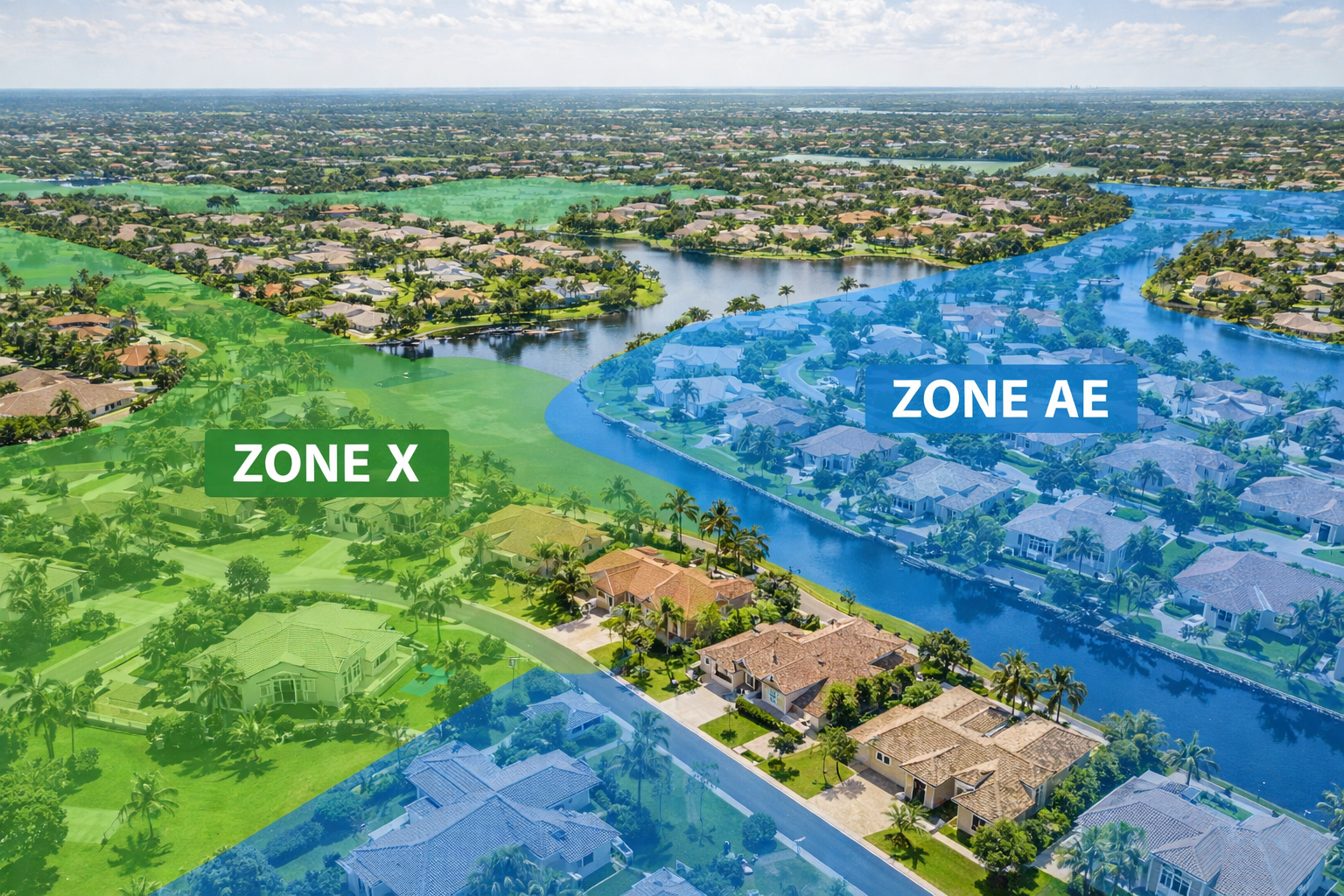
Zone AE is similar to Zone A but includes a determined base flood elevation (BFE). This designation helps insurance companies and buyers better understand the expected flood levels. Properties here also require flood insurance for federally-backed mortgages, and insurance rates are typically more favorable than Zone A because the exact risk level is quantified.
Zone AH – Shallow Flooding Areas
Zone AH designates areas prone to shallow flooding (typically 1-3 feet), usually from localized drainage issues or adjacent water bodies. While technically lower risk than Zones A and AE, properties here still require mandatory flood insurance for federally-backed mortgages.
Zone X – Moderate to Low Risk
Zone X areas are outside the 100-year floodplain and are considered moderate to low risk. Flood insurance is not required for federally-backed mortgages in Zone X, but it’s still recommended. Many lenders require it anyway, and the peace of mind is often worth the modest premium.
Zone VE – Coastal High Hazard
Zone VE is rare in Davie itself but represents the highest-risk designation, typically found in coastal areas with high-velocity wave action. While uncommon in our inland community, it’s worth knowing about if you’re considering properties near coastal neighborhoods.
Flood Insurance Requirements and Costs
Here’s what you need to know about flood insurance in Davie: it’s required by lenders for high-risk zones (A and V zones) but not technically required in Zone X. However, many lenders require it anyway, and most savvy investors get coverage regardless of zone designation.
Average flood insurance in Davie runs approximately $420 per year, but this varies dramatically based on several factors: your specific flood zone, the property’s elevation relative to the base flood elevation, whether the structure has been elevated, the age of the home, and the coverage limits you choose.
You have two insurance options: the National Flood Insurance Program (NFIP) and private flood insurance carriers. While NFIP is the traditional choice, the private flood insurance market in South Florida is growing, sometimes offering competitive rates and better coverage options. For a $600k+ property, comparing both options could save you significant money over the life of ownership.
Critical Documents: Elevation Certificates
One of the most important documents you can obtain for a Davie property is an elevation certificate. This document, prepared by a licensed surveyor, establishes the elevation of your home’s lowest floor relative to the base flood elevation. This single document can dramatically impact your flood insurance rates—in many cases, reducing premiums significantly.
If a property has been elevated (a common mitigation strategy in South Florida), the elevation certificate proves it, which translates to lower insurance costs. For buyers in the $600k+ range, the cost of obtaining an elevation certificate ($350-$600) is negligible compared to potential insurance savings over decades of ownership.
Risk Factor Scores: Beyond FEMA Zones
In addition to FEMA’s traditional zone designations, modern flood risk assessment uses Risk Factor Scores ranging from 1 (minimal risk) to 10 (extreme risk). Most Davie properties fall between 4 and 7, indicating moderate to elevated flood risk that’s manageable with proper planning and insurance.
These scores factor in precipitation, surge risk, proximity to water bodies, and historical flood data. Understanding your specific Risk Factor Score helps you make an informed decision about whether a property meets your risk tolerance and investment timeline.
Smart Buyer Strategies for Davie Flood Zones
1. Check the FEMA Map Before Making an Offer
Visit the FEMA Flood Map Service Center to verify the exact flood zone designation for any property. Don’t rely on what a seller or agent tells you—get it from the official source. The 2024 updates may have changed designations from previous years.
2. Obtain an Elevation Certificate Early
Whether the property appears elevated or not, get an elevation certificate. If the home has been raised above the BFE, this document could be worth tens of thousands in insurance savings over the years.
3. Compare Insurance Options
Don’t automatically assume NFIP is your only option. Get quotes from private flood insurance carriers. For higher-value properties in Davie, private options are increasingly competitive and may offer superior coverage.
4. Evaluate Drainage Patterns
Visit the property during and after heavy rain to observe drainage patterns. Does water pool near the foundation? Is it near a canal or retention pond? These observations matter as much as any official designation.
5. Factor Flood Insurance Into Your Budget
For a $600k+ home in a high-risk flood zone, annual flood insurance could range from $400 to over $1,000 per year depending on elevation and other factors. Make sure this ongoing cost fits your investment strategy.
New Construction and Flood Mitigation
If you’re considering new construction homes in Davie, here’s the advantage: all new builds are required to comply with current flood codes. This means elevated foundations, impact-rated windows and doors, and construction materials selected for flood resilience. New construction in flood-prone zones can actually reduce insurance costs compared to older homes.
How Flood Zones Impact Property Values and Insurance
Properties in high-risk flood zones typically cost less than comparable homes in low-risk areas, but the savings are often offset by higher insurance costs. When evaluating a $600k+ property, calculate the true cost of ownership including flood insurance. A home that costs $30,000 less but carries an extra $200/year in insurance is a poor trade-off over a 30-year mortgage.
Conversely, a property in a lower-risk zone may command a premium, but the reduced insurance costs—along with improved resale potential and lender flexibility—often justify that premium for sophisticated buyers.
Understanding Davie’s Community Flood Control Systems
Davie benefits from sophisticated regional flood control managed by the South Florida Water Management District. The extensive canal network, pump stations, and drainage systems are state-of-the-art, continuously maintained to protect our community. However, these systems have limits, especially during hurricane season when multiple inches of rain can fall in short periods.
If you’re moving to Davie, understanding the realities of living in South Florida includes accepting that flood preparation is an annual necessity. This is why so many Davie homebuyers factor flood insurance and elevation considerations into their purchase decisions.
Frequently Asked Questions About Davie Flood Zones
Q: If my property is in Zone X, do I really need flood insurance?
A: While not required for federally-backed mortgages, Zone X properties are still at risk. Many lenders require it anyway, and most insurance professionals recommend it. The cost is minimal compared to the potential risk, especially for a $600k+ investment.
Q: How much can an elevation certificate reduce my insurance?
A: Elevating your home’s flood insurance premium depends on how much above the BFE your structure sits. Homes elevated 2-3 feet above BFE often see 20-40% insurance reductions. For properties elevated 4+ feet, savings can exceed 50%. It’s worth investing in a professional survey.
Q: Are FEMA flood maps ever updated for Davie?
A: Yes, the most recent updates were released July 31, 2024. FEMA periodically revises maps based on new data, improved modeling, and community feedback. Always check the latest official maps before purchasing.
Q: What’s the difference between NFIP and private flood insurance?
A: NFIP is government-backed and has standardized rates. Private insurance can be more competitive, especially for elevated homes or properties in lower-risk zones. Private policies may offer higher coverage limits and more flexibility. Compare both for your specific property.
Q: If I’m buying a $600k+ home in Davie, should flood risk affect my decision?
A: Absolutely. While Davie’s flood risk is manageable with insurance and mitigation, it should factor into your investment decision. Compare similar properties across different zones, factor in insurance costs, and consider your risk tolerance. For sophisticated buyers, the lower prices in high-risk zones can make excellent investments if properly insured.
Understanding flood zones is just one aspect of making an informed real estate decision in Davie. To learn more about what makes the $600k price point special in our community, explore our complete market analysis, or get a comprehensive understanding of safety and security in Davie.
Ready to find your ideal Davie home with confidence? Contact Anthony Spitaleri today for a personalized consultation on flood zones, insurance strategies, and how to maximize your investment in South Florida real estate.

Leave a Reply