CDD Fees vs HOA in Davie, FL: What Buyers Pay
What is the difference between CDD fees and HOA dues in Davie, FL?
In Davie (33324), most communities charge HOA dues only, billed monthly by a private association. A CDD, or Community Development District, is different. It repays a community’s infrastructure through an assessment on your annual property tax bill, on top of your taxes and any HOA dues. CDDs stay rare inside Davie, but new construction is where you are most likely to find one, so confirm it before you write an offer.
If you are shopping Davie’s new construction, you have probably seen two different monthly numbers and wondered which one is real. One is the HOA due. The other, on some newer communities, is a CDD assessment that shows up in a place most buyers never think to look. The gap between them can move your true carrying cost by a few hundred dollars a month, so it pays to understand both before you sign.
Why most Davie communities are HOA only
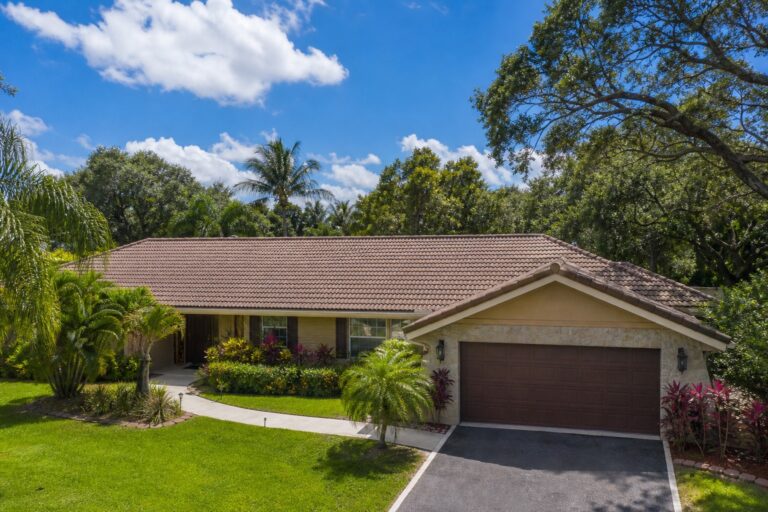
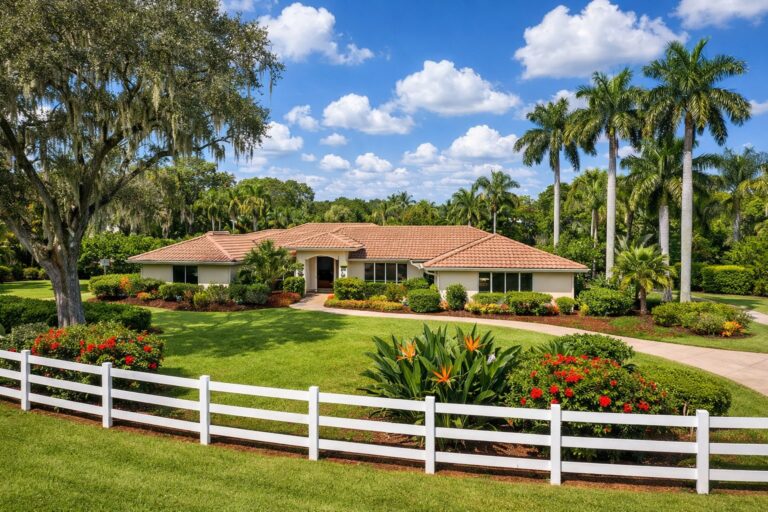
Davie grew up as horse country and acreage, and most of its neighborhoods were platted and built long before Community Development Districts became the standard way to finance new subdivisions. Established communities like Long Lake Ranches (33330) and Hawkes Bluff (33330) run on HOA dues alone. There is no CDD line on those tax bills because the roads, drainage, and common areas were paid for and folded into the original development decades ago.
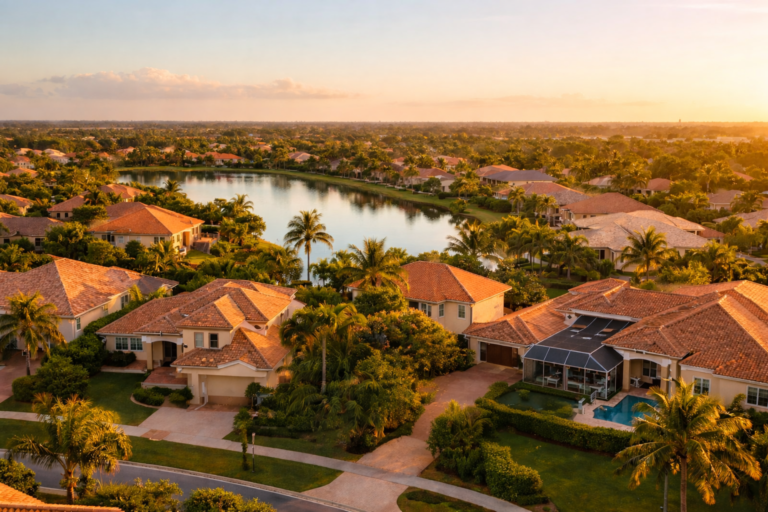
CDDs are far more common in the master planned communities of Central Florida and Southwest Florida. Broward County has a handful, but inside Davie they stay the exception, not the rule. Where you are most likely to meet one is brand new construction, because a developer building today may use a CDD to finance the infrastructure and pass the repayment to the first wave of owners.
If you are relocating from Central Florida or the Orlando area, this trips people up in the other direction. You may be used to a CDD on every new home and assume Davie works the same way. It usually does not, which is good news for your tax bill, but it also means you cannot copy your old community’s math onto a Davie purchase.
What a CDD actually costs and where it hides
A CDD is a special purpose unit of local government created under Florida Statutes Chapter 190. When a developer builds a new community, someone has to pay for the roads, drainage, utilities, and amenities. A CDD borrows that money through bonds, then bills residents to pay it back.
An HOA due and a CDD assessment are not the same animal. Your HOA is a private association you pay monthly or quarterly, and it governs rules, amenities, and shared upkeep. A CDD is a government entity that exists mainly to repay and maintain infrastructure. A community can have one, the other, or both, which is why two homes with identical list prices can carry very different monthly costs.
Here is the part that catches buyers. A CDD assessment does not arrive as a separate monthly bill like an HOA due. It lands on your annual property tax bill as a non ad valorem assessment, listed alongside your regular taxes. Because it rides along with the tax bill, plenty of buyers never see it until the first bill shows up.
The assessment usually has two parts:
1. A bond or debt portion that repays the infrastructure bonds. This part is finite and typically runs 20 to 30 years, then falls off once the bonds are paid.
2. An operations and maintenance portion that funds ongoing upkeep. This part does not expire as long as the district exists.
Statewide, single family CDD assessments commonly run from about $1,000 to $3,500 a year, and some run higher. On a monthly basis that is roughly $85 to $300 on top of your taxes and any HOA dues.
How to check if a Davie home carries a CDD
You never have to guess. Before you write an offer, confirm a property’s CDD status in a few minutes:
1. Pull the property tax bill or the TRIM notice and read the non ad valorem section. A CDD shows up there by name.
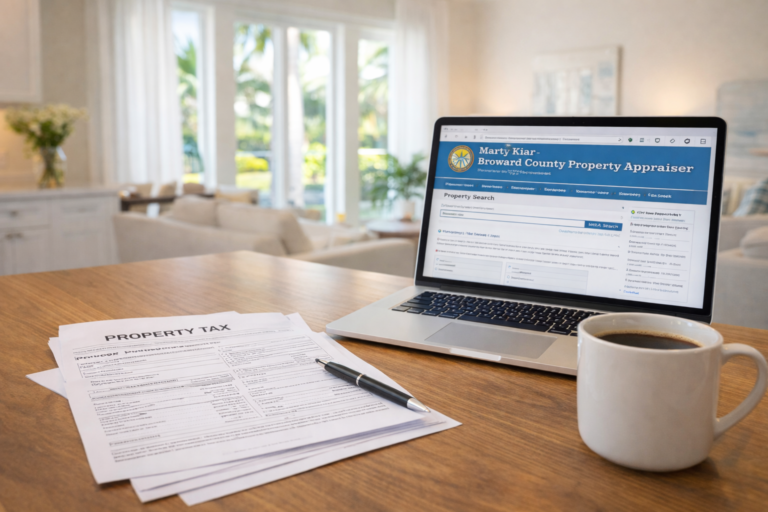
2. Search the parcel on the Broward County Property Appraiser at bcpa.net and review the assessment detail.
3. Check the tax bill breakdown through Broward County Records, Taxes and Treasury.
4. If a district exists, request the CDD estoppel letter. It states the current balance and how many years of bond payments remain.
5. For a brand new home, Florida Statute 190.048 requires a bold disclosure in the first sale contract inside a CDD. On a resale, that homework falls on you and your agent, so do not skip it.
This is exactly the kind of number I run with buyers before we tour a single new construction home in Davie, because it changes what you can actually afford. Local rules and permits sit with the Town of Davie, while the assessment itself always traces back to the county tax bill.
Why no CDD does not always mean cheaper
It is tempting to treat a community with no CDD as the cheaper choice. Sometimes it is not. When there is no district financing the infrastructure, the developer folds those costs into the home price and the HOA carries all the maintenance. That can push HOA dues higher.
A current example is Marigold by Pulte (33328), a new single family community in Davie priced from the $1.3 million range with HOA dues advertised around $384 a month. Whether any given new community also carries a CDD is something you confirm on the parcel’s tax bill, not the sales brochure.
The honest comparison is never the label. It is the all in monthly carrying cost: mortgage, taxes, insurance, HOA dues, and any CDD assessment added together. Run those five numbers side by side and the cheaper community is often not the one you expected. This ties directly into the full cost of living in Davie and your closing costs in Davie, both of which shift with the community you choose. If you want to sidestep both an HOA and a CDD entirely, Davie’s acreage and no HOA homes are a different path worth comparing.
Frequently Asked Questions
Are CDD fees tax deductible in Florida?
Not the way many buyers assume. A CDD assessment sits on your property tax bill, but the IRS generally does not treat the full amount, especially the bond principal, as deductible real estate tax. Talk to your tax professional about your specific situation before you count on any deduction.
Do CDD fees ever go away?
The bond portion does. It repays the infrastructure debt and usually falls off after 20 to 30 years once the bonds are paid. The operations and maintenance portion continues as long as the district exists, so a community is never fully free of the assessment.
Are CDD fees common in Davie, FL?
No. Most Davie communities, including established ones like Long Lake Ranches and Hawkes Bluff, run on HOA dues alone with no CDD. Districts are far more common in Central and Southwest Florida. New construction is where you are most likely to find one in Davie.
Can I pay off a CDD bond early?
Often yes. Many districts let owners pay off the remaining bond balance in a lump sum, which removes the debt portion of the assessment. The operations and maintenance portion stays. Ask for the estoppel letter to see your exact payoff figure before you decide.
Talk to a Davie Real Estate Expert
Buying new construction in Davie means reading numbers that never show up in the sales office, and a CDD is near the top of that list. If you are weighing a new community, the smart first move is a direct conversation. Schedule a Davie strategy call and we will run the real all in cost together before you commit.
Anthony Spitaleri
Living in Davie Florida
954-235-5783
Davie, Florida
livingindavieflorida.com
Written by Anthony Spitaleri, Broker Associate with Coldwell Banker and a Davie native. More about Anthony