Davie FL 1031 Exchange: Defer Tax on a Rental 2026
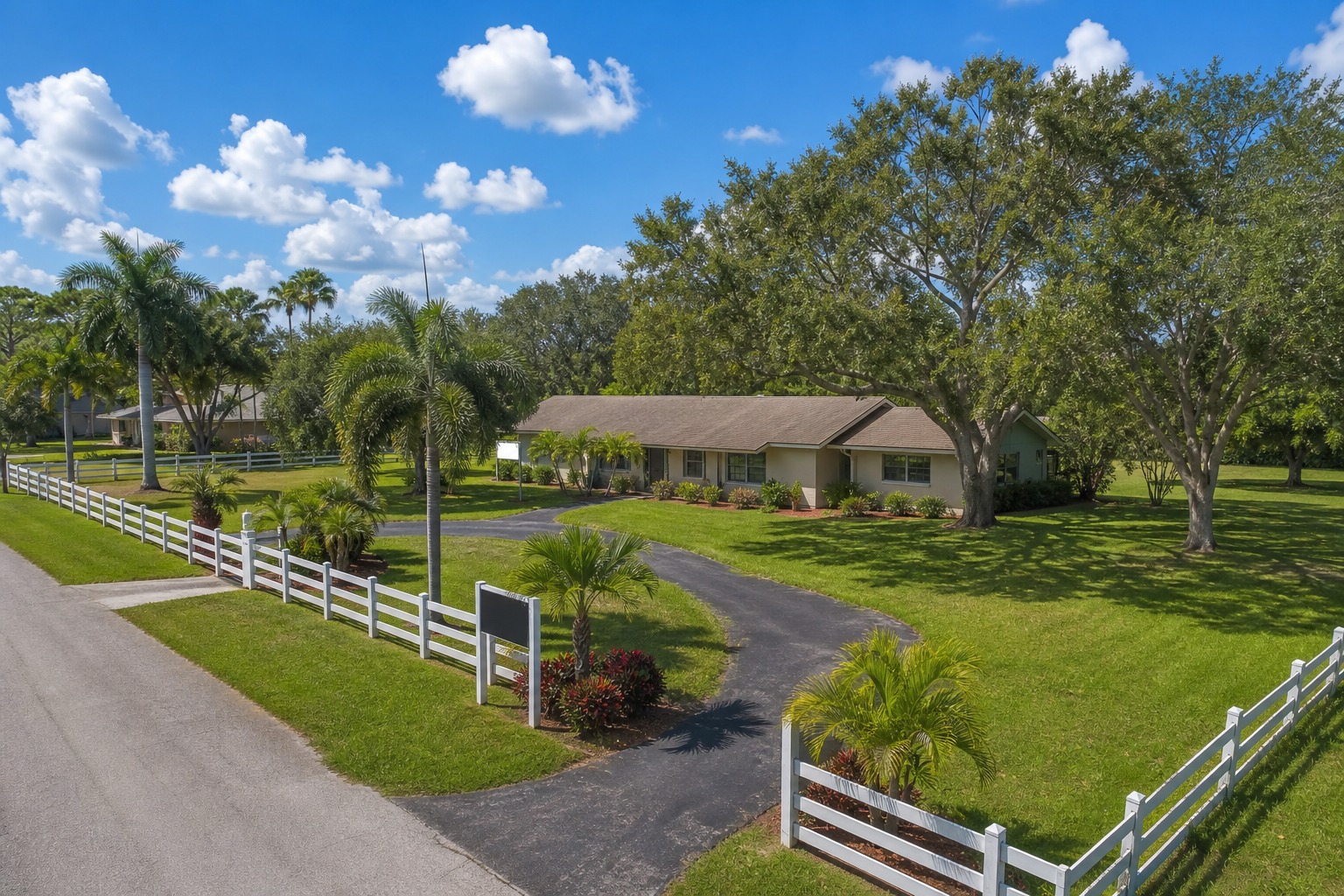
What is a 1031 exchange on a Davie investment property?
A 1031 exchange lets you defer federal capital gains tax, the 3.8% net investment income tax, and up to 25% depreciation recapture when you sell a Davie rental and reinvest the proceeds into another investment property. You get 45 days to identify the replacement in writing and 180 days to close, and a qualified intermediary must hold the money the entire time.
You sold a Davie rental for far more than you paid, and now a six figure federal tax bill is standing between you and your next property. A 1031 exchange is how investors defer that bill instead of writing the check. The rules are strict and the clock is unforgiving, so the time to understand them is before you list, not after you close.
This is a davie florida 1031 exchange investment property guide for owners selling a single family rental or acreage income property in Davie, ZIP codes 33314, 33324, 33325, 33328, 33330, and 33331. It is educational only. It is not tax or legal advice. Every real exchange runs through a CPA and a qualified intermediary, and this post tells you what to ask them.
The 45 day and 180 day clocks start the day you close
The entire exchange is governed by two federal deadlines, and they both begin on the same day: the day your Davie rental sale closes.
You have 45 calendar days to identify your replacement property in writing to your qualified intermediary. You have 180 calendar days to close on that replacement. These deadlines come straight from the IRS Section 1031 like-kind exchange rules, and there is no extension for weekends or holidays. The only relief is a federally declared disaster, which is rare and outside your control. Miss either date and the deferral collapses. The full tax comes due on that year’s return.
Most failed exchanges die on the 45 day identification window. Investors assume they will find something and run out of runway. In a market like Davie, where inventory for the right income property can be thin, you want at least one replacement lined up before your sale even closes.
When you identify, you pick one of three rules:
1. Three property rule: name up to three properties of any value, then buy at least one.
2. 200% rule: name any number of properties, as long as their combined value stays at or under 200% of what you sold for.
3. 95% rule: name any number at any value, but you must acquire at least 95% of the total you identified.
Most Davie investors use the three property rule because it is the simplest to defend.
Why the qualified intermediary matters more than anything
You are never allowed to touch the money. This is the rule that trips up more first time exchangers than any other.
A qualified intermediary, often called a QI, is an independent third party you engage before your sale closes. The QI holds your sale proceeds, then wires them to close on your replacement. If the money hits your own bank account, even for a single day, the IRS treats it as constructive receipt. The exchange fails and the entire gain becomes taxable.
That means the QI has to be in place before the closing table, not after. You cannot sell first, sit on the cash, then decide to do an exchange. The paperwork and the intermediary have to exist at the moment of sale. This is a coordination problem, and it is exactly the kind of thing a data driven agent maps out for you before you list a Davie income property, so the exchange documents and the QI are ready when the offer comes in.
What actually gets deferred, and the Florida angle
A 1031 exchange defers three separate federal taxes that can stack into a serious number on a Davie rental that has appreciated:
- Federal long term capital gains at 0%, 15%, or 20% depending on your income.
- Net investment income tax of 3.8% if your modified adjusted gross income tops $200,000 single or $250,000 married filing jointly.
- Unrecaptured Section 1250 depreciation recapture at a rate up to 25% on the depreciation you claimed while you owned the rental.
Here is the Florida specific part. Florida has no state capital gains tax, so a Davie 1031 defers federal tax only. That is still a large number once you stack 20% plus 3.8% plus recapture, but it means the benefit is purely federal. If you are relocating a New York or New Jersey rental into a Davie replacement, you escape that origin state’s tax through the sale itself, not through the 1031.
One thing the exchange does not waive: Florida documentary stamp tax. When you buy the replacement, you still pay documentary stamp tax at 70 cents per $100 of the deed price. A 1031 defers income tax on the gain. It does not touch transfer taxes at closing. The replacement property will also be reassessed at its purchase price by the Broward County Property Appraiser, which resets the taxable value for your future property tax bill. You can see how those closing costs work in the Davie closing costs guide, and how the broader tax picture fits a relocation budget in the Davie cost of living breakdown.
Boot is what turns a clean exchange into a tax bill
To defer 100% of your gain, you have to buy up, not down. The replacement property must be equal or greater in value, you must reinvest all of your equity, and you must replace the debt you paid off.
Anything you keep is called boot, and boot is taxable to the extent of your gain. There are two common kinds. Cash boot is money left over that you pocket instead of reinvesting. Mortgage boot is debt relief, which happens when your new loan is smaller than the one you paid off and you do not make up the difference with cash. Plenty of investors nail the timeline and still get a surprise tax bill because they bought a cheaper replacement and created mortgage boot without realizing it.
This is the single family and acreage math that makes Davie an interesting exchange market. An investor selling an appreciated gated community rental can roll into western Davie acreage income property, or into a small income parcel, and keep the full deferral as long as the value and debt line up. If you are weighing what the current numbers look like, the Davie investment property market breakdown and the Davie rental yield analysis show what income property is actually producing here right now.
A 1031 is not the primary home capital gains rule
Do not confuse a 1031 exchange with the tax break you get when you sell your own house. They are two different laws for two different situations.
A 1031 exchange only applies to real property held for investment or business use. Your primary residence does not qualify. The break for selling the home you live in is the Section 121 exclusion, which lets you exclude up to $250,000 of gain single or $500,000 married if you meet the ownership and use tests. If you are selling the Davie home you actually live in, that is a Section 121 question, not a 1031 question, and it is a different conversation with your CPA.
The 1031 is for the rental, the acreage income parcel, or the property you bought to hold and lease. Get that distinction right before you plan anything, because applying the wrong rule to the wrong property is where the expensive mistakes live.
Anthony Spitaleri is a Broker Associate with Coldwell Banker, one of the most established residential real estate brands, and a Davie native who returned home in 2025. Through Coldwell Banker, he brings the brokerage data systems and market tracking that an income property exchange demands, tracking sale prices and days on market at the community level so a replacement property can be identified inside the 45 day window rather than scrambled for after the clock starts.
Frequently Asked Questions
If the sale money hits my own account for a day, does the whole exchange fail?
Yes. If you take actual or constructive receipt of the proceeds at any point, the IRS disqualifies the exchange and the full gain becomes taxable. That is why a qualified intermediary must be engaged before your Davie sale closes and must hold the funds the entire time. You never touch the money.
Can I 1031 exchange a Davie rental into a property in another state?
Yes. Almost any United States investment real estate is like kind to any other, so a Davie single family rental can be exchanged for investment property anywhere in the country. The same 45 day and 180 day federal deadlines apply. Remember that Florida charges no state capital gains tax, so leaving Florida does not add a state tax on the sale itself.
Does a 1031 exchange work on the home I live in?
No. A 1031 applies only to property held for investment or business use. Your primary residence falls under the separate Section 121 exclusion, which can exclude up to $250,000 of gain single or $500,000 married filing jointly. If you are selling your own Davie home rather than a rental, that is a different rule and a different plan.
What happens to the deferred tax when I eventually sell for good?
The deferred gain carries forward into your replacement property’s cost basis, so the tax is deferred, not erased. If you keep exchanging into new investment properties, you keep deferring. Investors often hold until death, when heirs may receive a stepped up basis. That is an estate planning question for your CPA and attorney, not something to assume on your own.
Talk to a Davie Real Estate Expert
Anthony Spitaleri, Broker Associate with Coldwell Banker and a Davie native, maps the specific timeline and replacement strategy for every investor selling a Davie income property, so the qualified intermediary and the 45 day identification plan are ready before the sale closes rather than after. If you want to see how a 1031 exchange would work for your exact Davie rental and your next property, the next step is a direct conversation. Schedule a free 15-minute strategy call and walk into your decision with the timeline and the numbers known. Always confirm the tax details with your CPA and a qualified intermediary.
Anthony Spitaleri
Living in Davie Florida
954-235-5783
Davie, Florida
livingindavieflorida.com
About Anthony Spitaleri
Anthony Spitaleri is a Broker Associate with Coldwell Banker, one of the most established residential real estate brands, founded in 1906. A Davie native who returned home in 2025 after 13 years in Miami Beach, Anthony specializes in luxury homes and estates above $1 million, acreage and equestrian properties with no HOA, and relocation buyers moving to Davie from out of state. He created livingindavieflorida.com, the most in-depth independent Davie real estate resource available, with in-depth coverage of Davie’s gated communities, acreage and equestrian properties, and luxury estates, plus original weekly market data, interactive tools, Town Council recaps, and a 24/7 AI concierge. Anthony has been licensed in real estate since 2013 (BK3281907), is a Certified Strategic Coach through Coaching Services International (CSI), an active member of the Davie Cooper City Chamber of Commerce, and a weekly volunteer at Bit by Bit Therapeutic Riding Center in Davie.