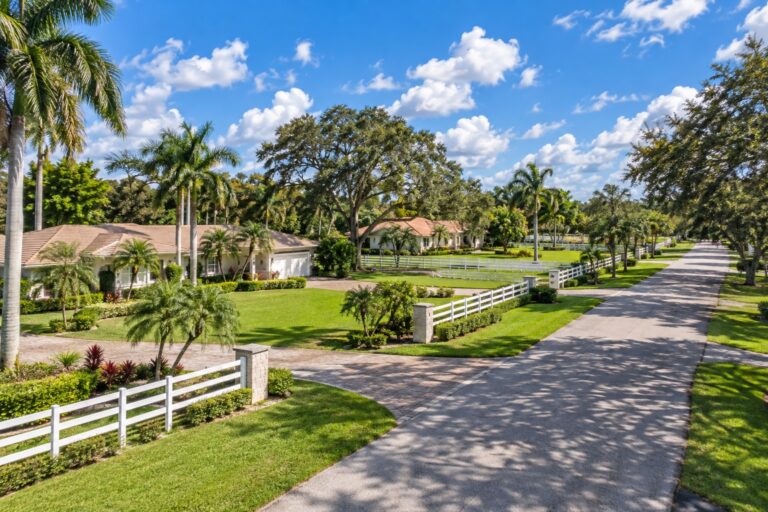
Florida Amendment 3: The December 31 Residency Date for Davie Buyers
Do you have to buy a home in Davie by December 31, 2026 for Amendment 3?
Probably not, as the amendment is written, but this is not settled. What matters for Florida Amendment 3 is Florida residency by December 31, 2026, not a closing date. Establish permanent residency by that date and, once you own a home and qualify for homestead, the text phases you into the full exemption. Miss it and a newcomer starts with a smaller exemption for four years. The Legislature still has to write the procedures, so treat this as the reading of the text, not a guarantee.
Here is the question I keep getting from people planning a move to Davie this fall. Should I rush to close on a home before the end of the year because of Florida Amendment 3? On my reading of the text, the answer is no, and the reason is one sentence sitting inside the amendment.
I grew up in Davie, I have been licensed in Florida since 2013, and a lot of my work is with people relocating here from out of state. That is exactly why I made the video below. Amendment 3 goes to voters on November 3, and it carries a December 31, 2026 date that changes what a relocating buyer should actually do right now.
What Florida Amendment 3 actually does
Start with the plain numbers, because the headline version is incomplete. If it passes on November 3, the homestead exemption on property taxes other than school taxes rises to $150,000 in 2027 and $250,000 in 2028, then adjusts for inflation, per the enrolled amendment text. Your school taxes are not touched, and in Broward County that is roughly a third of your bill. The measure needs 60 percent of the vote to pass and would take effect January 1, 2027, per the St. Johns County Property Appraiser.
So it is a real cut on the ad valorem taxes that are not school taxes and nothing on the rest. If anyone told you Florida property taxes are going to zero, that is not what is on this ballot.
Davie is not a cheap place to own. The median single family sale price in Davie is davie_stat segment=”sfh” field=”median_sales_price” label=”1″], so a larger homestead exemption is real money on a real bill. The question is who gets the full version and who waits, and that is where the date comes in. For the full homeowner picture, the [Davie property tax guide walks through homestead, Save Our Homes, and how a Broward bill is built.
The one sentence about newcomers
There are two tiers in this amendment, and the headline figure leaves out the second one. If you were a permanent Florida resident as of December 31, 2026, you phase into the full exemption as it grows. If you were not, and you hold title on or after January 1, 2027, even if you bought earlier, you get a $50,000 exemption on property taxes other than school taxes, adjusted for inflation starting in 2028, for four years, then the full amount beginning your fifth year of exemption, per the enrolled amendment text. From January 1, 2030, a county or municipality may shorten that wait by a two thirds vote of its governing body for a critical local need.
Same house, same street, same tax rate. The only difference is one line on the calendar.
What does that gap come to in Davie? Enough to matter in each of those four years, but the exact figure depends entirely on your assessed value and your local millage. Pull your own TRIM notice, find every ad valorem tax line that is not the school board, and check your assessed value with the Broward County Property Appraiser. The exemption does not reduce non ad valorem charges such as fire, solid waste, and stormwater. Run your own number rather than trusting a round figure from anyone, including me.
The word that changes your timeline
The decisive word in that sentence is residence, not close and not buy. As written, the test is not whether you closed on a home or even whether you own one. It is whether you maintained a permanent residence in Florida by December 31, 2026. Florida already defines permanent residence, and for homestead applicants the property appraiser weighs a list of factors that includes a recorded declaration of domicile, a Florida driver license in place of your old one, voter registration at your Florida address, a Florida tag on your car, the address on your federal tax return, and where your children attend school.
Notice what is not on that list. A closing date. Closing on December 28 without actually living here does not make you a resident, and it cuts both ways. The life has to move to Florida, not just the deed.
Read that way, a lease with the domicile paperwork appears to qualify. The enrolled amendment text still leaves the Legislature to write the procedures, and the rewritten ballot summary says this rule applies only to the extent the U.S. Constitution permits. Treat this as the reading of the text, not a guarantee, and confirm your situation with a Florida tax attorney.
So the plan that fits this amendment for many relocating buyers is not to rush a purchase. It is to become a Florida resident before the New Year. A lot of the people I work with lease first for nine months to a year, get to know which part of Broward County fits, file the residency paperwork the week they land, and buy the right home once they know the area. You do not have to compress the largest purchase of your life into a holiday weekend to beat a line on a tax bill. If you are mapping the move itself, start with moving to Davie Florida and the things to know before the move.
The week you land, start the residency paperwork:
1. Record a declaration of domicile in the county’s official records.
2. Switch your driver license and car registration to Florida and give up your old state license.
3. Register to vote at your Florida address.
4. Put your Florida address on your next federal return and move your banking.
If you lease first, record the declaration and update your voter registration to the home you buy when you file for homestead.
What could stop it, and the honest cautions
Do not buy a home on the assumption it passes. It needs 60 percent of the vote, per the St. Johns County Property Appraiser, and it has faced litigation and organized opposition. In August a Leon County judge struck its original title and summary as misleading, and the Attorney General rewrote them. The amendment stayed on the ballot. It can pass and it can fail. If it fails, nothing changes.
Someone also pays for a cut this size. The state’s revenue analysts estimated the recurring hit to local revenue in the billions of dollars statewide, which points to future fights over fees, rates, and services. Your savings would be real, and so would the pushback.
Two more honest points. You cannot hold a residency tax break in two states at once. If you keep a homestead exemption or a similar residency credit in another state, you are not entitled to this one, and if the property appraiser catches it later, Florida law allows years of back taxes plus penalties and interest. If your situation has any wrinkle, a spouse staying behind or a business up north, spend an hour with a Florida tax attorney before you file. And if you already own and live in your home here and never filed for homestead, just file. The deadline each year is March 1.
If you already own here
There is a quieter change for owners who are not moving. If you own a second home or a piece of Davie property that is not your primary residence, you do not get the homestead exemption on it, but the annual cap on how fast its assessed value can rise on the part that is not school taxes drops from 10 percent to 5 percent starting January 1, 2027, per the enrolled amendment text. Acreage that carries an agricultural classification is assessed on its use, so it sits outside that cap, and a change of ownership can reset a property to full market value.
Two things that do not change: the Save Our Homes cap of 3 percent or CPI, whichever is lower, on your primary residence, and the $500,000 portability cap, both left in place by the enrolled amendment text. If you have held acreage out here for years, that lower cap is worth watching in 2027.
So the real question is not whether to close by December. It is whether to live here by December. Those are two different plans, and in my view rushing the largest purchase of your life to beat a tax date is the wrong trade. This is the kind of timing I map with relocating buyers before we ever tour a home, and it is a different read than the general Amendment 3 explainer.
Frequently Asked Questions
Do I have to buy a home in Davie before December 31, 2026?
Probably not, as the amendment is written. It ties the larger homestead exemption to Florida residency by December 31, 2026, not to a closing. The test is maintaining a permanent residence in Florida, not owning a home, so a lease with the domicile paperwork appears to qualify, and you could buy the right single family home later. The Legislature still has to write the procedures, and the rewritten ballot summary says this rule applies only to the extent the U.S. Constitution permits. Treat this as the reading of the text, not a guarantee, and confirm your situation with a Florida tax attorney.
What do new Florida residents get if they arrive in 2027?
If you were not a permanent Florida resident by December 31, 2026 and hold title on or after January 1, 2027, even if you bought earlier, you get a $50,000 homestead exemption on property taxes other than school taxes, adjusted for inflation starting in 2028, for four years, then the full amount beginning your fifth year, per the enrolled amendment text. The same home gets the smaller exemption in those first four years.
Does Amendment 3 change Save Our Homes or portability?
No. The Save Our Homes cap of 3 percent or CPI, whichever is lower, and the $500,000 portability cap both stay in place, per the enrolled amendment text. Amendment 3 raises the homestead exemption and lowers the assessment cap on property that is not your homestead.
What happens if Amendment 3 does not pass on November 3?
Nothing changes to current law. It needs 60 percent to pass, per the St. Johns County Property Appraiser. It has faced litigation and organized opposition, and in August a Leon County judge ordered its title and summary rewritten, per WTXL. Do not buy a home on the assumption it passes.
How do I prove Florida residency to the property appraiser?
For a homestead application, the property appraiser weighs the factors in Section 196.015, and no single factor is conclusive. They include a recorded declaration of domicile, a Florida driver license, voter registration, a Florida car tag, your federal return address, where your children attend school, and where you work and bank. A closing date is not on that list. The Legislature has not yet written the procedures for the December 31, 2026 test, so how a renter would prove residency on that date is not settled. Keep dated records and confirm your situation with a Florida tax attorney.
Talk to a Davie Real Estate Expert
Anthony Spitaleri is a Broker Associate and REALTOR® with Coldwell Banker Realty who grew up in Davie and works with people relocating to the area from out of state. If you are planning a move and want to map the residency timing, the paperwork, and the right buying window around Amendment 3, the next step is a direct conversation. Schedule a free 15 minute strategy call and build your plan before December 31, not after it.
Anthony Spitaleri
Broker Associate, REALTOR® | Coldwell Banker Realty
Creator of Living in Davie, Florida
Davie, Florida | Serving Davie, Weston and surrounding Broward markets
954-235-5783
Florida License BK3281907
@livingindavieflorida
Written by Anthony Spitaleri, Broker Associate, REALTOR® with Coldwell Banker Realty, raised in Davie. More about Anthony